
What Happens If You Skip Commissioning on a New Gas Detection System?
A new gas detection system can look finished and still not protect anyone. That’s because gas detection equipment is only proven once it’s commissioned, not when it’s mounted on the wall.
Sensors are usually the most expensive part of a system. Commissioning protects that investment by making sure every sensor, alarm, and output actually does what you think it does.
Commissioning Explained: What It Verifies That Installation Does Not
Commissioning is the process of proving the gas detection system works as installed and as designed. It goes beyond “power is on” and confirms the full sequence, from detection to alarm response to control actions.
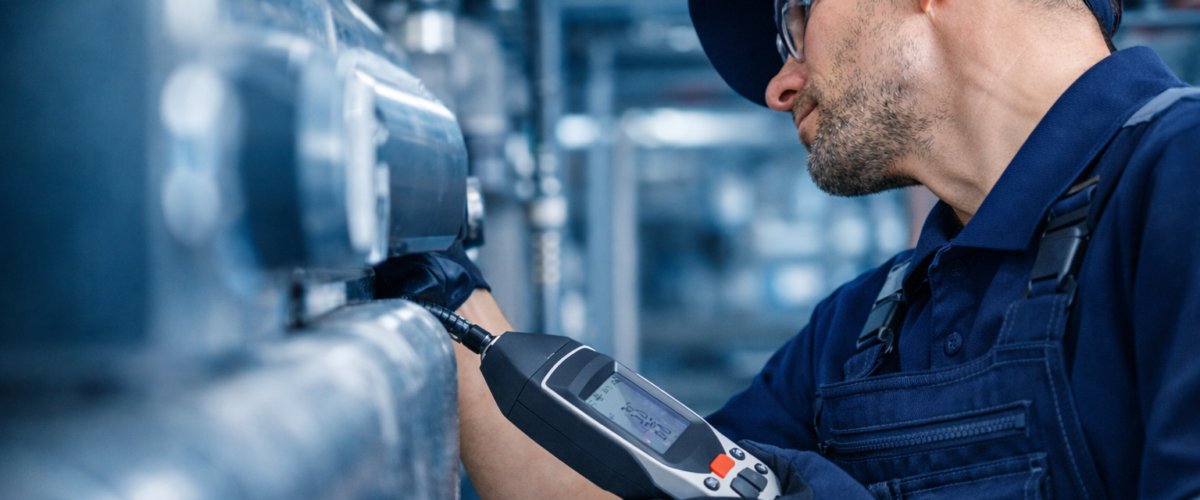
At Hawk, gas detection commissioning typically includes reviewing plans and the sequence of operations, confirming sensors are online, calibrating sensors with gas, verifying programming and outputs, and doing live functional gas testing to prove the system reacts correctly.
Calibration checks sensor accuracy. Installation mounts and wires devices. Commissioning verifies the whole safety function.
What Gets Tested During Gas Detector Commissioning
A commissioning tech is validating the full chain, not just one device. That usually includes:
- Sensor placement and whether coverage matches the hazard
- Calibration verification using test gas
- Alarm setpoints, including warning and alarm thresholds
- Audible and visual alarms, horns, strobes, and annunciation
- Fan start, shutdowns, and other output actions
- Panel programming, relays, and any BAS or PLC integration
- Fault behavior, what happens when a sensor fails or a loop goes down
If your site uses a gas detection system for ventilation control or automatic shutdown, commissioning is where you confirm those actions happen reliably, every time.
Common Issues Found During Commissioning a Detection System
These are problems that are easy to miss until you test the system as a whole.
Sensors installed in the wrong locations.
We see sensors placed too far from likely leak sources, or placed where airflow patterns delay detection.
Wiring and output mistakes.
A system can be powered on while a relay output is not wired, not programmed, or wired to the wrong device.
Programming and integration errors.
If the system ties into a BAS, PLC, or SCADA, commissioning often reveals mapping issues, wrong registers, or logic that does not match the design intent.
Calibration baselines that create false confidence.
If calibration is rushed or skipped, readings can drift and the system may look “normal” while being wrong.
The Real Risks Of Skipping Commissioning a Gas Detection System
Skipping commissioning means you never verified the gas detection system works end-to-end. That creates several real-world risks.
Undetected leaks.
The biggest risk is a hazard that is present while the system stays quiet because something was misconfigured, miswired, or never tested.
False alarms and alarm fatigue.
Misconfigured setpoints or bad placement can create nuisance alarms that train people to ignore the system.
Unplanned downtime later.
Fixing commissioning issues after occupancy often means shutdown windows, lift access, rework, and delays that cost more than doing it right at startup.
Finger-pointing between trades.
Without a commissioning report, BAS contractors, electricians, and gas detection vendors can all blame each other. Live functional testing ends the debate fast.
What Commissioning Typically Costs, And Why It Varies
For commissioning only, we commonly see:
- Small systems (2–6 points, horn/strobe, basic fan start, basic panel): $2,300–$2,750
- Mid-size systems (10–25 points, multiple outputs, BAS tie-in): $2,750–$5,000
Cost goes up when access is difficult, lift work is needed, or multiple site visits are required to coordinate with building automation staff or an AHJ. Complexity and coordination usually drive price more than the equipment itself.
Time can range from under 4 hours on a small site to multi-week efforts on complex projects with many outputs and integration points.
Gas Detection System Compliance and Liability You Can’t Ignore
Commissioning is also about documentation. If there is an incident, or if you are audited, you want proof that your safety system worked on day one.
Many compliance and insurance conversations come down to the same question. Can you show due diligence with a documented process and functional testing results?
A commissioning report, calibration documentation, and clear records help you answer that question.
What Good Commissioning Documentation Looks Like
At a minimum, you should end up with:
- A commissioning services report showing what was tested and what passed
- Calibration records and certificates for each sensor
- Alarm setpoints and programmed logic documentation
- Functional gas test proof that alarms and outputs triggered correctl
- As-built notes or redlines if anything changed during startup
- Operator-level training notes so staff knows what alarms mean and what to do
This paperwork is not busywork. It’s what protects you when someone asks, “How do you know it was working?”
FAQs
Is commissioning really necessary?
Yes, if you want to be confident the system will actually respond to a real event. Installation shows it’s in place. Commissioning proves it functions as a safety system.
What happens if my system isn’t commissioned?
You may never discover wiring, programming, placement, or integration problems until an alarm event happens. Best case, it causes nuisance alarms and downtime. Worst case, it misses a real hazard.
Can I commission the system myself?
You can do pieces of it if you have the tools, test gas, and knowledge of the full sequence of operations. The hard part is proving every output and alarm behavior under real conditions, and documenting it in a way that holds up during audits or incident reviews.
Commission Your Gas Detection System With Trusted Experts
Hawk commissions gas detection systems by testing the system as a complete safety function. We use live gas testing, verify setpoints and outputs, and document what was proven so you can operate with confidence.
If you have a new gas detection system that was installed but never fully verified, commissioning is the fastest way to reduce risk and prevent expensive surprises later.